Adding a Second Bathroom Sink Means Getting Inside the Walls First
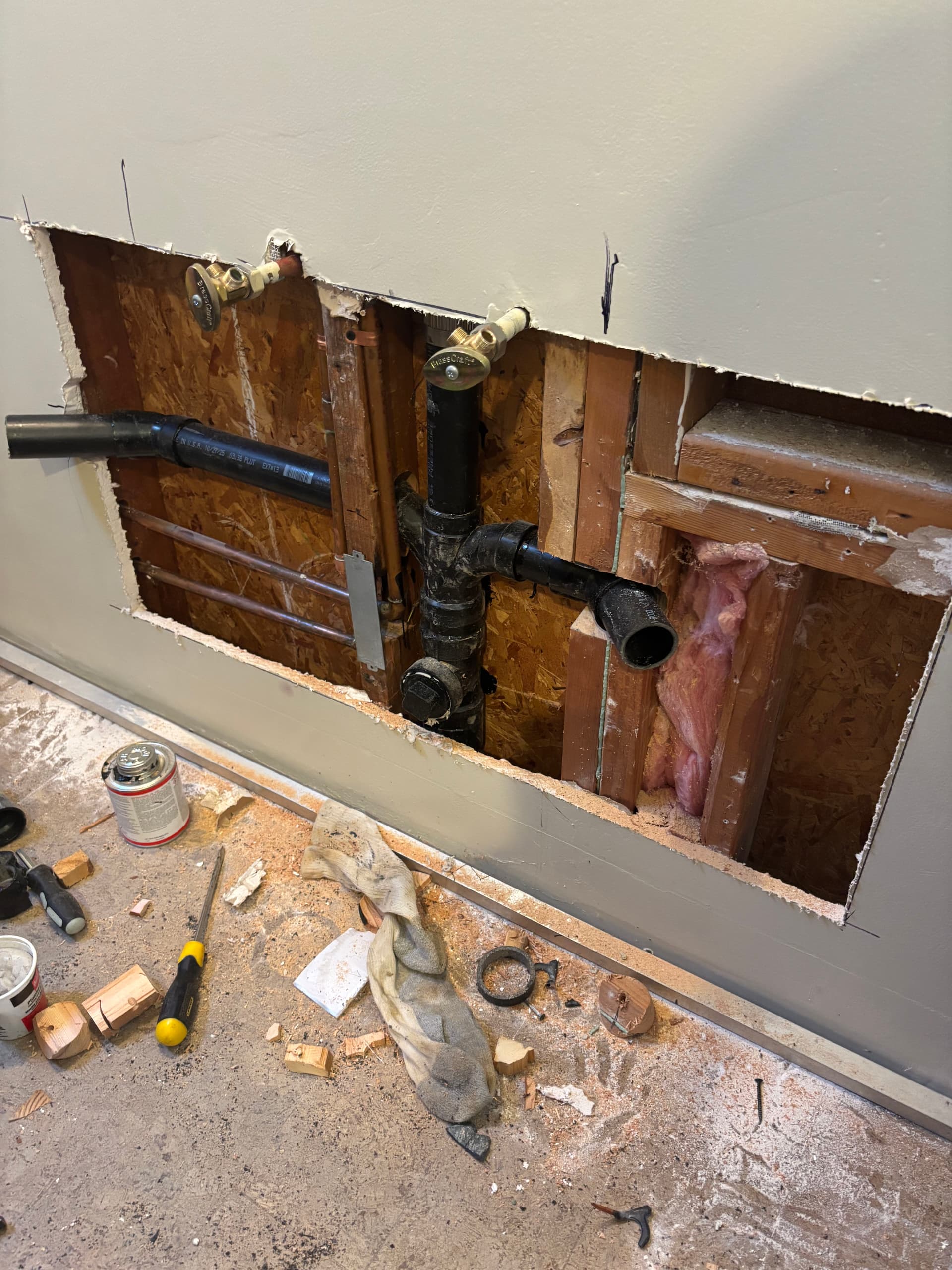
Adding a second sink to a bathroom sounds simple on the surface. But what it actually requires is opening up the wall and reworking the drain setup to handle the new fixture properly. That's exactly what this job called for.
Here's what we were working with - an existing wall cavity with cast iron drain pipe already running through it, plus copper water supply lines that were still in solid condition. No need to replace what isn't broken. We kept the existing water lines in place and focused our attention on getting the drain side right for the new sink.
We tapped into the existing drain stack and added the fittings needed to route a new drain line out to where the second sink will sit. Getting the slope, the connection point, and the fitting orientation right at this stage is what prevents problems down the road. Rushed rough-in work is one of the most common sources of slow drains and gurgling fixtures that homeowners deal with years after a remodel.
This is the kind of work that gets covered back up with drywall and forgotten about - until something goes wrong. Doing it right the first time, with proper fittings and clean connections, is what makes the difference between a bathroom that works well for years and one that causes headaches.
Whether you're adding a fixture, reconfiguring a layout, or dealing with older cast iron drain lines that need attention, this is the type of behind-the-wall work we handle every day. General plumbing repair and remodel rough-in is a big part of what we do, and we take the hidden work just as seriously as everything a homeowner can actually see.